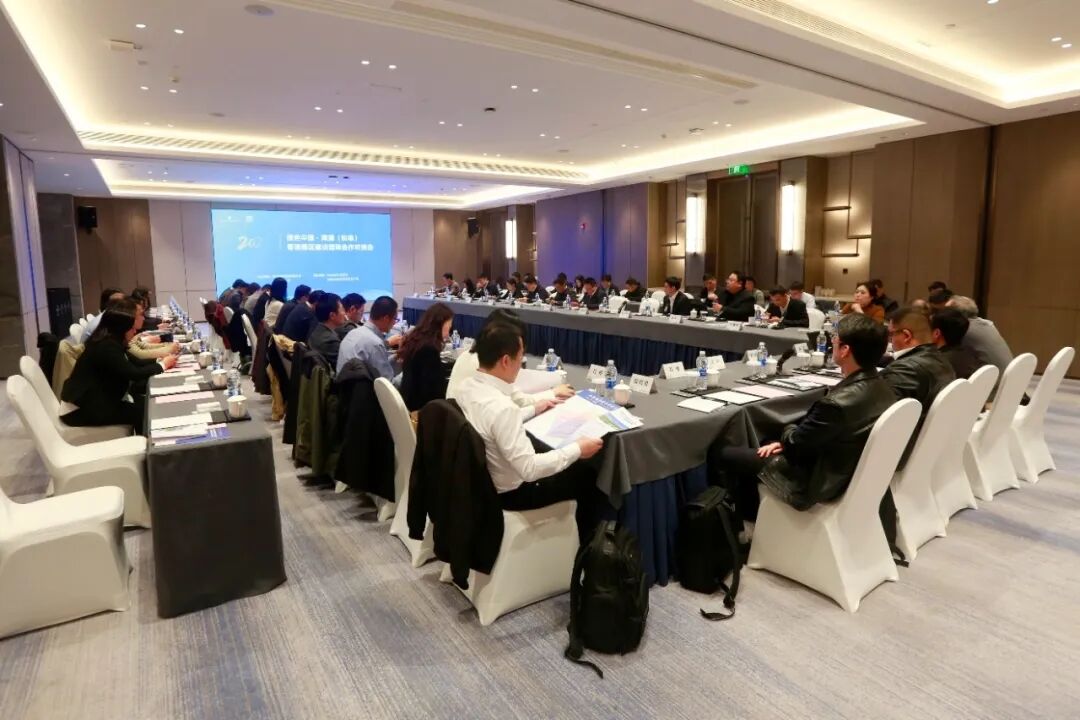
To promote international green energy cooperation and seize the opportunities presented by the Northeast Asian green marine fuel and hydrogen-based energy industry chain, ECP recently organized a delegation of foreign enterprises to conduct an in-depth study tour on the value chain of green hydrogen, green ammonia, and green methanol. The delegation visited the Dalian Changxing Island Economic and Technological Development Zone, Panjin Port, Liaodong Bay New Area, Dawa District of Panjin City, and Panshan County, among other locations. During the tour, the delegation had extensive exchanges with local governments, industrial parks, leading petrochemical enterprises, port groups, and key project sites, gaining a comprehensive understanding of Liaoning Province’s planning, layout, and cooperation opportunities in areas such as national-level petrochemical bases, green fuel hub ports, biomass-based hydrogen production, and the storage, transport, and bunkering of green ammonia and green methanol. This research tour has facilitated multiple cooperation intentions, built an efficient matchmaking platform for international companies to enter the Northeast China green energy market. The visit focused on four key areas including: hydrogen-based energy, green marine fuel, low-carbon transformation of the petrochemical industry, port logistics, and biomass resource utilization. It covered government parks, central state-owned enterprise platforms, leading private enterprises, and joint venture refineries, forming a full-chain connection spanning policy, industry, infrastructure and trade.

As the national-level petrochemical industrial base and a core hub for Northeast Asia’s green marine fuel, Changxing Island leverages its advantages as a national-level industrial base,it has promoted a total investment of approximately 55 billion RMB in projects for production, storage, transportation, trade and bunkering of green methanol, green ammonia and sustainable aviation fuel(SAF) accelerating their implementation. The industrial park has been incorporated into the national hub system for "North-to-South and inland-to-overseas ammonia/methanol distribution". It is simultaneously advancing the construction of an integrated logistics network of "terminals + pipeline corridors + storage tanks + railways". Key facilities such as COSCO Shipping’s warehousing and logistics park and dedicated liquid ammonia carriers have been successively put into operation. Changxing Island has integrated core port resources including Dalian Port, boasting professional liquid chemical terminals, port-side storage tanks and sea-rail inter-modal transport systems. It is accelerating the construction of an international shipping green fuel bunkering center, emerging as a key logistics node for the import and transit of green ammonia and methanol. Hengli Petrochemical Industrial Park, as a benchmark enterprise of the world’s green refining and chemical integration park, is endowed with abundant industrial by-product hydrogen resources, methanol-to-olefins (MTO) units, and self-owned liquid chemical terminals. It boasts broad cooperation potential in the purification of gray hydrogen, substitution of green methanol, and production of ammonia/alcohol via green hydrogen power generation. The delegation visited the Institute for Dalian Northeast Asia International Shipping Center, which positioning as a think tank for shipping research tour and development in the region, the tour highlighted the future trends of green hydrogen, ammonia, and methanol, as well as the challenges and opportunities in international shipping and trade policies.

The delegation conducted an in-depth study of Panjin’s core location advantages, including its green energy and biomass resource bases. They held discussions with various levels of Panjin’s municipal government, including Dawa District and Panshan County, and visited key sites such as the Panjin Liaodong Bay New Area, Panjin Port Economic Development Zone, Panjin Port Group, and Panshan County—areas that concentrate the advantageous resources required for green hydrogen, ammonia, and methanol production, including natural resources, CCUS, green storage and transportation, marine fuel, and foreign trade. . The Panjin Port Economic Development Zone, a provincial-level development zone, leverages Panjin Port and Shuai Xiang Industrial Park to focus on establishing a green marine fuel production, processing, storage, and transportation hub in northern China. Its supporting biomass centralized heat source project can stably supply CO₂ to meet the demand for green hydrogen-based methanol production, supported by robust industrial facilities and policy support. The green ammonia storage tank project at Panjin Port is jointly advanced by the Hydrogen Energy Co., Ltd of China Energy Engineering Corporation Limited(CEEC), Jiangsu ADF, and Panjin Port, with a total investment of approximately 1.2 billion RMB. The project plans to construct large-scale low-temperature ammonia tanks, methanol tanks, and related pipelines and loading and unloading facilities, aiming to establish a large-scale green ammonia storage hub in Northeast China. The project has completed filing and land procedures and is about to enter the construction phase. The Dongguo Reed Farm in Panshan County boasts abundant straw and reed biomass resources and is exploring a circular model of “biomass gasification + CCUS + green hydrogen, green ammonia, and green methanol,” providing a sustainable raw material pathway for zero-carbon hydrogen production and green chemical manufacturing.

This visit has provided foreign enterprises with a clear view of Liaoning’s unique strengths in five major areas: green hydrogen, green ammonia, and green methanol; green marine fuels; low-carbon transformation of the petrochemical industry; port trade; and biomass resource utilization. These strengths are supported by a combination of favorable policies and national-level platforms, a national-level petrochemical hub, a green energy supply guarantee system, and multiple provincial hydrogen energy plans—offering clear industrial positioning and strong implementation support. Liaoning boasts a solid industrial foundation, including a refining cluster with a capacity of tens of millions of tons, well-established chemical parks, skilled technical professionals, and comprehensive supporting facilities, enabling low-cost transformation with rapid results. Its ports serve as key hubs, with Dalian Port, Panjin Port, and others equipped with liquid chemical loading and unloading, storage, and multi-modal transport capabilities, well-suited for international bunkering and cross-border trade of green ammonia and green methanol. The region is also rich in resources, with abundant wind and biomass resources providing a low-cost, zero-carbon pathway for green hydrogen production from wind power and biomass conversion. Industrial parks and enterprises are open to collaboration in technology, investment, trade, finance, and certification, offering strong support for international entities to participate in the joint development of the industrial chain. The delegation held in-depth exchanges with various parks and enterprises on topics such as investment in green ammonia and methanol projects, utilization of by-product hydrogen purification, green marine fuel bunkering, cross-border trade and carbon certification, and port logistics cooperation. Multiple preliminary docking intentions were reached, laying a solid foundation for subsequent implementation of cooperation.

Going forward, ECP will take this research tour as a starting point to continuously build a normalized matchmaking opportunities between international green energy enterprises and Liaoning’s industrial platforms. It will track and promote the implementation of intended cooperation projects, organize special matchmaking fairs, project roadshows and policy interpretation sessions, and assist international enterprises in deeply participating in the construction of Northeast Asia’s green hydrogen, ammonia and methanol industrial chains, green marine fuel centers and low-carbon petrochemical bases, as to promote in-depth progress of cross-border green energy cooperation.